


"I can't cry," my older brother whispered two weeks after our brother died.
My tearless brother said he envied my ability to cry.
The weight of his grief bent his head down. He spoke in a soft monotone.
I'm quite a bit younger than this brother. We weren't friends; he was graduating from the university, and I was barely entering high school. At the time, I thought it was our age gap, but now I know that the dynamics of my family of origin were not conducive to any friendship.
He finished his undergraduate work, then threw himself into the rigors of graduate school. He excelled. His thesis was touted as brilliant. When he wasn't studying, he drank a lot.
Never tears. Not much emotion, ever.
Later in life, some business associates commented that my brother spoke in a monotone. Others called it the "Mormon flatline."
In my early career, I shrugged it off. I assumed he carried his "church voice" with him all the time. For those unfamiliar with certain "Mormon" or LDS Church typical speech patterns, I found a description of it on Quora recently, described as "...soothing at best and somniferous at worst."1
Now, I wonder, was it a form of alexithymia?2 One study3 found the rate of alexithymia in men to be almost twice that of women.
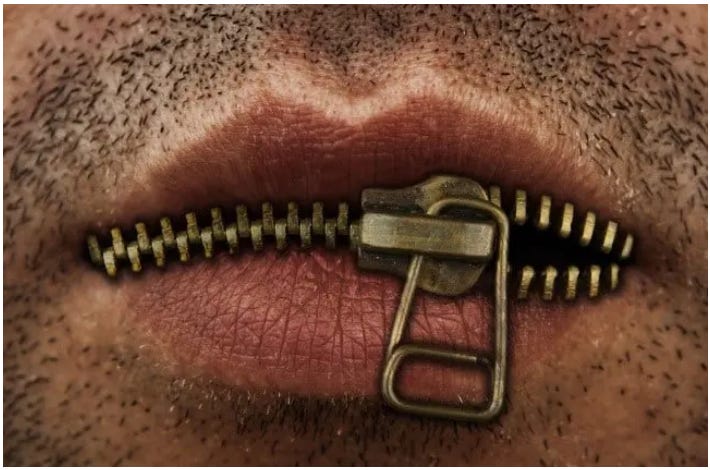
There is a plethora of information about how men have a harder time expressing emotions.45
Little boys are sexually abused as easily as little girls
Now, I have a hunch: little boys are sexually abused just as much as little girls.6 Then, for some reason, little boys can't talk about it or ever deal with it.78 They grow up to be men who can't even let the topic enter their conscious awareness. They rapidly dismiss it or don't even hear it when the topic of childhood sexual abuse is raised. I wonder why.
I wonder if men dismiss it because it is so painful.9
Please know: I know how hard it is to be an adult and deal with--and heal--from the trauma of childhood sexual abuse. It's tough, but one can heal.
Male survivors must acknowledge their pain and heal. They can do it. Then, men can stand proud and share their triumph over this root cause, Childhood Sexual Abuse (CSA), of humanity’s soul.10
Background:
As a child, I was sexually abused, typically with 2-3 other boys. That's twice as many little boys as one little girl. Based on my experience, why is there a myth that this is a crime that happens only to little girls? And what happens to those little boys?11
I contend that if men fully acknowledged that the sexual abuse of children is a human problem--not just a girl problem--we would advance threefold in our efforts to bring societal awareness12 to this horrific problem. This awareness could be a catalyst to eradicate this crime against humanity.
Trauma to Strength
I have intentionally reached out to Leon Macfayden because he has overcome extensive trauma, and he isn't afraid to express his feelings and share his vulnerabilities. I also know there are many men in the "Trauma to Strength" community. I want to start a conversation about men, feelings, healing, and any preconceived notions that this wonderful community might have about childhood sexual abuse.
It starts with breaking the silence. I'd love to hear from you. If you are uncomfortable sharing your story, please reach out to someone. Leon would be a safe place to start.
https://www.quora.com/Why-do-the-general-authorities-of-the-Church-of-Jesus-Christ-of-Latter-day-Saints-speak-with-such-soothing-voices
In our family therapy meeting, my brother acknowledged that he had also been sexually abused as a child.
https://pubmed.ncbi.nlm.nih.gov/10088984/
I have often joked that the only emotion men have permission to express is anger. And, women are often labeled “bitchy” when they express anger.
Here are a few of the articles I found on Men’s Inability to Express Emotions:
https://www.lumohealth.care/blog/7-reasons-why-men-can-struggle-to-talk-about-their-feelings
https://welldoing.org/article/why-do-men-struggle-to-express-their-feelings
https://www.psychologytoday.com/us/blog/the-other-side-of-relationships/202203/why-so-many-men-struggle-with-their-emotions
https://thepsychologygroup.com/male-normative-alexithymia/
The statistics do not reflect my experience. The official statistics show girls are sexually abused more than little boys. https://rainn.org/facts-statistics-the-scope-of-the-problem/statistics-children-teens/
Many cannot talk about their past trauma or deal with it. It seems that men struggle with it more. Hence, because women tend to deal with it and talk about it, there is a public perception that this is a female problem.
Some who were sexually abused grow up to become perpetrators. Not all. And, not all boys who were sexually abused as little boys are destined to become perpetrators.
That's why I wrote Paperdolls & Cowboyboots. My therapist encouraged me to publish my writings because they showed the healing process from beginning to end.

I know what happened to several of the little boys in my childhood neighborhood. After the book was released in 1992, several reached out to me. There were three who acknowledged the abuse; sadly, all three of those men are now deceased (cancer or cardiac arrest). There are others, and tragically, three died by suicide.
There has been quite a bit of “awareness” of this toxic problem. When Paperdolls first came out, my co-author and I were all over the news. We did mainstream television, radio, and print interviews. The book’s first print of 5,000 copies sold out in a day. We weren’t the only ones speaking out; at that time, in the early 90s, there was an entire movement. But there was a severe backlash. Over time, people became aware of the issue, but they didn’t consider it a major problem. We need geniune awareness, in our patriarchal society, we need men’s pain and triump to help stabilize the awareness and be a catalyst to lasting change in our world.
Thank you for this. Every word.
Unfortunately very much so. And it’s life destroying. As adults victims are still mostly women but child predators spare no one